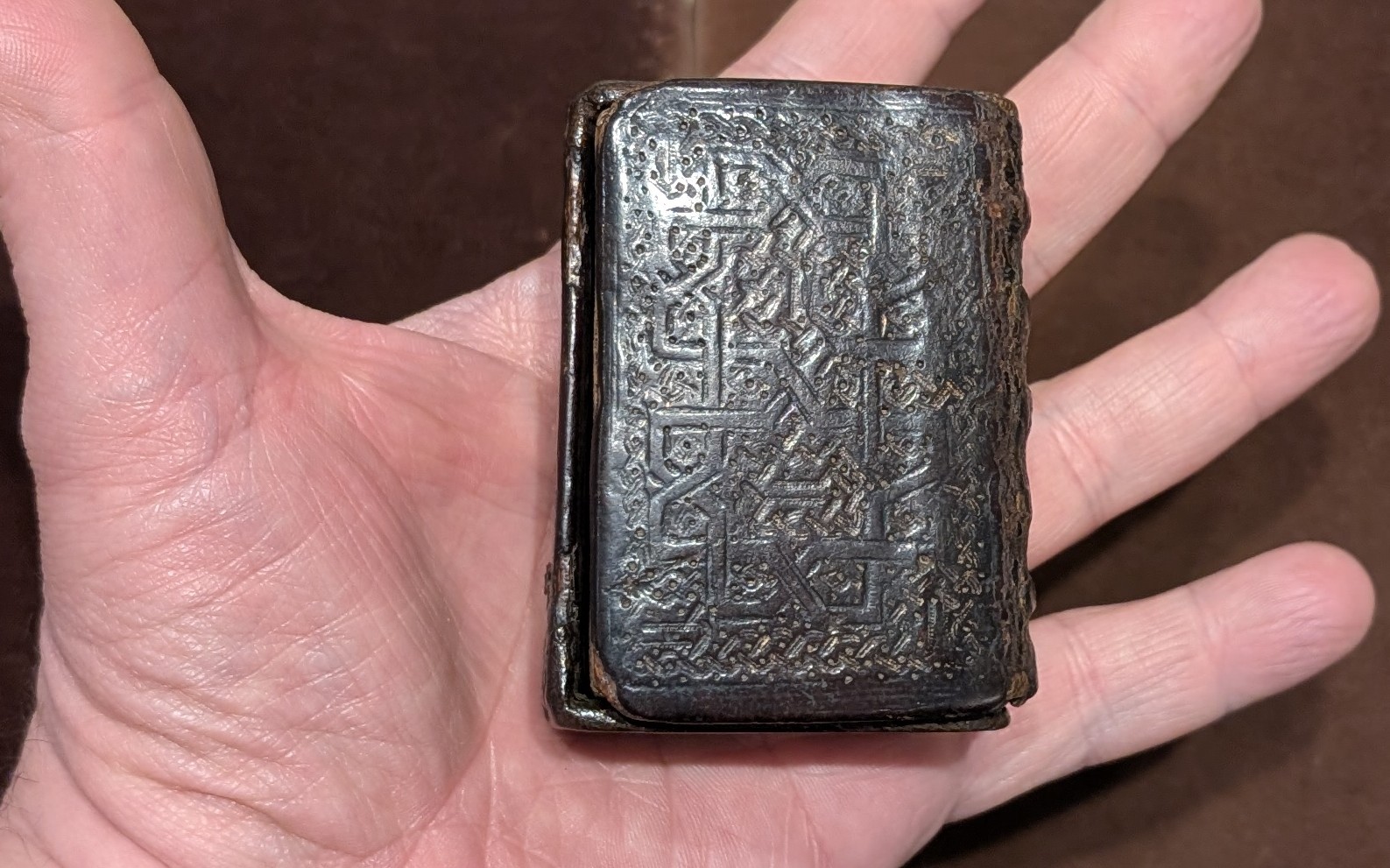
This fifteenth-century Spanish manuscript fits comfortably in the palm of a hand. Its parchment leaves measure only seven by five centimeters—about 2¾ by 2 inches, smaller than a modern credit card. Within that miniature format, 124 leaves preserve Hebrew versions of Hippocrates’ Aphorisms and a collection of astrological sayings attributed to Ptolemy.
Attributed to the ancient Greek physician Hippocrates, the Aphorisms became a foundation of medical learning across the medieval Mediterranean. While a recognizable Hippocratic core passed through successive translations and commentaries, at the same time, some medical physicians felt free enough to add to the text. They interpreted, supplemented, or challenged inherited teachings in light of their own knowledge and experience. Hebrew readers encountered this developing tradition through the work of Jewish translators and physicians.
The medieval medicine of the Hippocratic tradition understood health through the balance of four bodily humors: blood, phlegm, yellow bile, and black bile. Illness could arise when that balance was disturbed; treatment sought to restore it through diet, regimen, and other interventions. The manuscript also includes a Hebrew rendering of the famous Hippocratic Oath, bringing the physician’s ethical responsibilities into the same language as the medical teachings.
Jewish physicians treated patients across religious boundaries in medieval Spain and elsewhere. Some also translated medical works, helping knowledge circulate among Arabic, Hebrew, and Latin readers. Hebrew served as a language of international scientific learning as well as religious study.
The astrological text bound here with the Aphorisms reflects another part of that intellectual world: celestial influences could figure in explanations of the body and judgments about treatment. Known as the Centiloquium, or “Hundred Sayings,” it circulated under Ptolemy’s name, though scholars generally regard it as a later work.
The photographs show the care devoted to this tiny book. Its original fifteenth-century binding survives, its dark surface bearing a densely patterned design within a rectangular border. Inside, black Hebrew lettering in Sephardic semi-cursive script fills the small pages. Red ornamental panels mark divisions in the text, while fine looping penwork sweeps around the margins. Short cross-strokes and small circles enliven the long curves. This last image has been slightly adjusted for clarity of color.