

Abraham and Lot Depart from Haran
אברהם ולוט הולכים מחרן
Abraham and Lot Depart from Haran
אברהם ולוט הולכים מחרן
What do we see when we look closely?
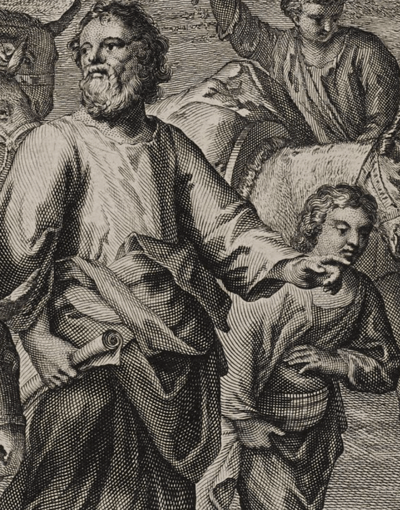
At the center of the commotion stands Abraham, serene and apparently in control. He grips a document in one hand, a small but telling sign of authority amid the disorder around him. His gaze turns heavenward, away from the immediate demands of the journey. Beside him stands a youthful Lot, whose discomfort could hardly be more apparent. While Abraham seems entirely at ease, Lot cannot decide what to do with his empty hands. With his right hand he tugs at his sash; with his left he awkwardly rubs his belly. His eyes narrow into a tense squint, and his tightly pressed lips produce an expression of almost nauseated disgust. It is a look familiar to anyone who has raised a teenage son.
Physical Closeness; Emotional Distance
Their physical proximity conveys the closeness of uncle and nephew, but their contrasting expressions already suggest the distance that will eventually separate them. Abraham looks toward heaven, absorbed in his divine calling, while Lot appears preoccupied with the immediate discomforts of the journey. The Bible will later describe their separation as their growing households become too large to remain together (Genesis 13). Hoet anticipates that development without turning the two men into enemies. Indeed, the mildly inattentive guardian and his sardonic young ward are recognizable precisely because their relationship is so ordinary.
Sarah's Story
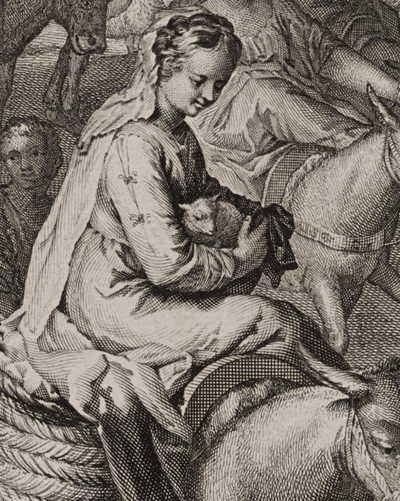
Another intimate drama unfolds nearby. A veiled woman, presumably Sarah, sits sidesaddle on a donkey, cradling a small lamb as tenderly as though it were a newborn child. The lamb evokes the traditional imagery of innocence and gentleness, while the woman's veil suggests modesty. But the animal also occupies the place of the child Sarah does not yet have. Her gesture gives visual expression to the barrenness that will become one of the central concerns of Abraham's story. In the midst of a procession defined by abundance—servants, possessions, and innumerable animals—Hoet quietly draws attention to the one thing Abraham and Sarah lack.
The Seething City and the Passionate Lovers
The city itself supplies the monumental setting appropriate to the beginning of a biblical epic. Its massive walls dwarf the people beneath them, while the crowded streets and gates convey the restless energy of urban life. Yet Hoet populates this imposing architecture with small human encounters. Among the tiny figures in the upper left of the composition, a couple stands with their heads together, apparently kissing, as though they were the only people in the world. Their private affection continues undisturbed by the momentous departure taking place around them. Such details invite the viewer to wander through the picture, discovering individual lives within the larger spectacle.
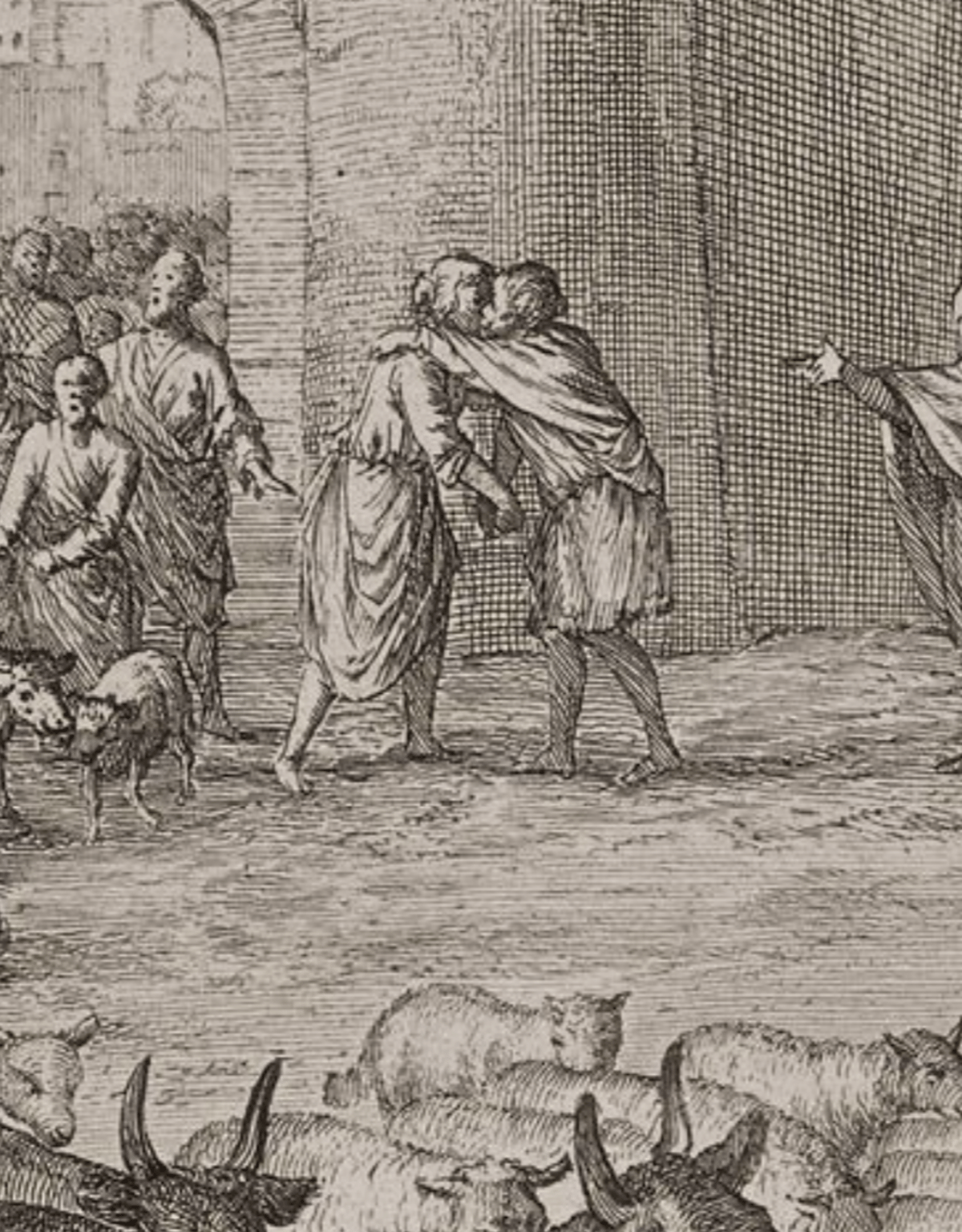
The engraving thus works on two scales at once. The architecture, the procession, and the unruly livestock establish the grandeur of Abraham's undertaking. The expressions and gestures of the people reveal the domestic realities concealed within that grandeur. Abraham's servants must manage animals that have wills of their own; Lot must endure a journey he does not seem to welcome; Sarah cradles a lamb in place of the child she longs for. Even the anonymous lovers find a moment for themselves amid the bustle of the city. Hoet presents the beginning of a sacred history without allowing its participants to cease being human.
Credit Where Due
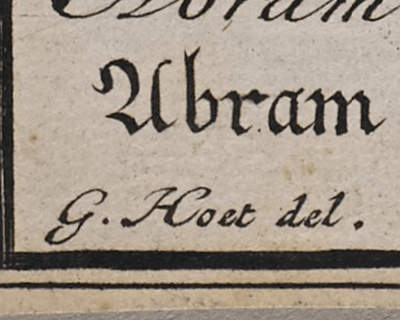
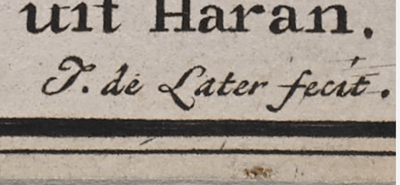
The print appeared in the illustrated Bible Taferelen der voornaamste geschiedenissen van het Oude en Nieuwe Testament, published at The Hague in 1723. Its multilingual captions made the biblical subject accessible to readers across Europe, including readers of Hebrew. At the lower corners, the signatures distinguish the two artists' contributions: “G. Hoet del.” (delineavit, “he drew it”) credits Hoet with the design. “J. de Later fecit” (“he made it”) identifies the engraver who translated that design into print.
Together, they produced an image that is at once monumental and disarmingly familiar: the founding journey of a biblical patriarch, and the complicated business of getting a family out of town.


