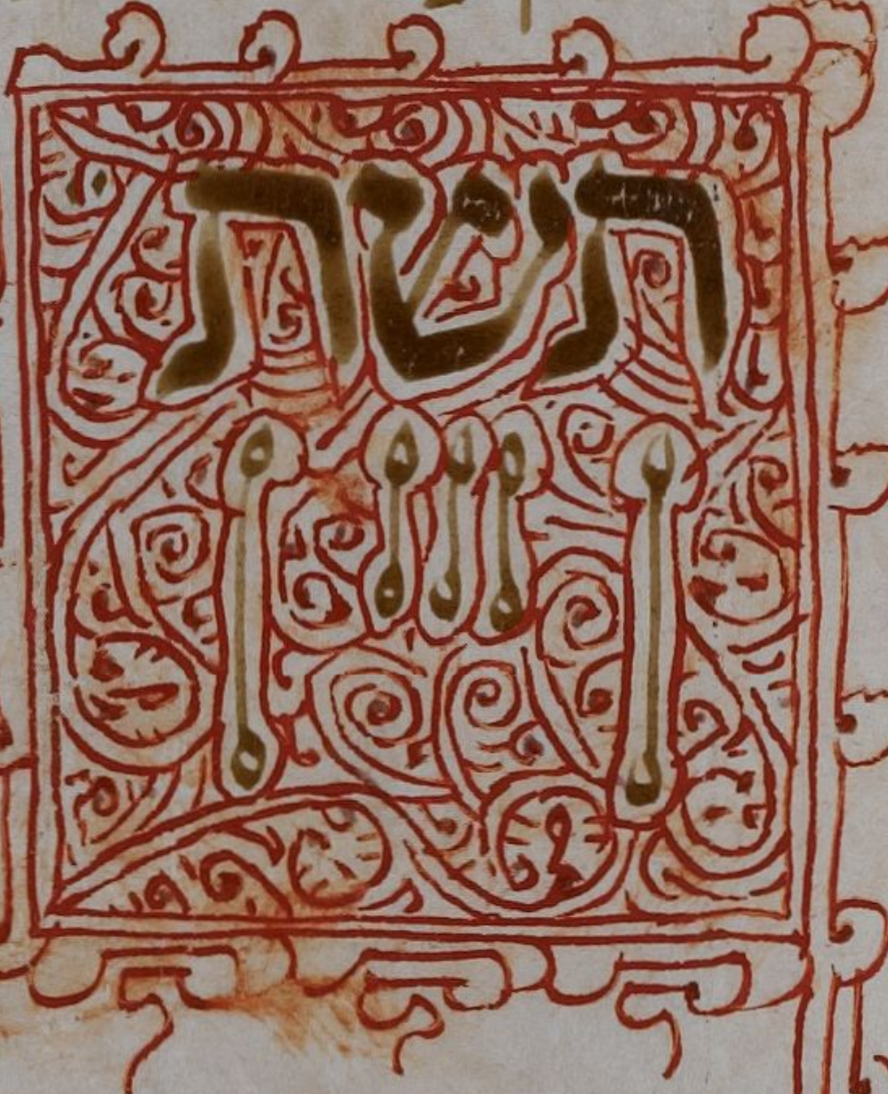
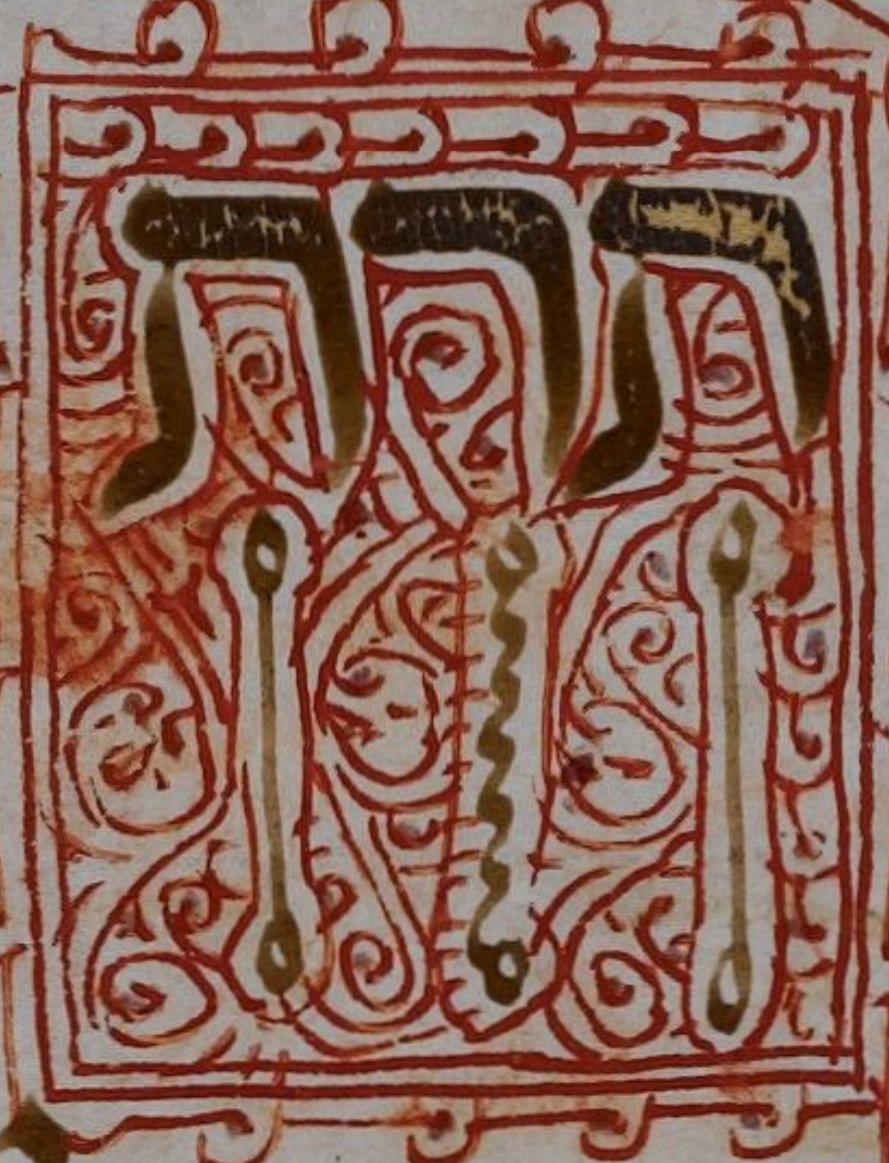
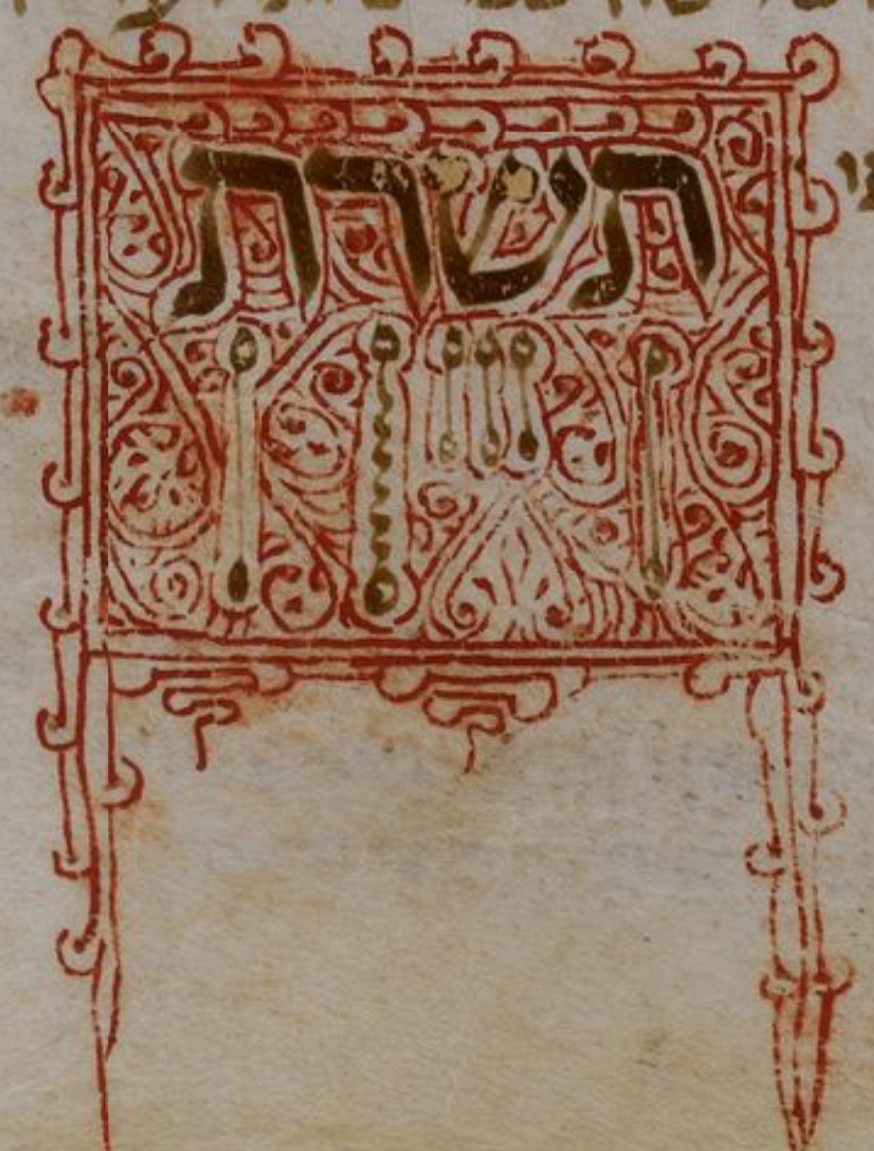
How can a prayer book show a sound? In this fifteenth-century Spanish manuscript, the shapes of the marks echo the sounds of the shofar. A long, unbroken stroke represents tekiah, the sustained blast. Three separate short strokes represent shevarim, the three broken sounds. A wavy stroke represents teruah, the rapid series of short sounds: its repeated turns suggest the pulsing interruption of the call.
Anyone who has heard the shofar may recognize these patterns intuitively, following the marks with the eye much as one follows the sounds with the ear. Even without that experience, a reader can distinguish continuity from separate beats and rapid repetition. The three strokes of shevarim make its three-part grouping especially clear. Beneath large Hebrew abbreviations, the signs combine into visual guides to the sequences of blasts prescribed for Rosh Hashanah.
The Mishnah already organizes the shofar calls into a threefold pattern: “three sets of three” (Rosh Hashanah 4:9). Each set places a teruah between two sustained tekiah blasts. It also measures the teruah as “three cries,” linking the ritual sound to the human voice. The manuscript’s diagrams give this regulated sequence a visible form.
Folio 43r brings these diagrams into the prayer service. Red penwork frames the lettering and sound symbols, filling the panels with scrolling ornament. Further down the page, animal heads extend from either side of another decorated panel. The enlarged details shown here reveal how the artist set the straight, broken, and wavy strokes within the ornament. Their contrasting shapes make the patterns recognizable at a glance. They function as graphic instructions, distinguishing sustained sound from interruption without specifying musical pitch.
The surrounding text directs the shofar blowing and includes the verse “Happy is the people who know the teruah” (Psalm 89:16), often translated as “the joyful shout.” Here, the verse stands beside signs that show what the shofar calls should sound like. The decoration gives prominence to a practical guide for worship.
These pages belong to the Rosh Hashanah liturgy, whose Shofarot blessing recalls the shofar at Sinai and anticipates its role in Israel’s future redemption. The diagrams give concrete form to the ritual sounds within that larger setting. Their visual language also invites comparison with the biblical account of Sinai, where “all the people saw the sounds” (Exodus 20:15). In this prayer book, readers can see the distinctions between calls they will hear during the service.
MS 4366 is the second part of the prayer book now divided between this volume and MS 4365. Together they are known as the Schloss-London Siddur. The first part combines weekday devotional readings with prayers for Shabbat and minor holidays. This volume continues the cycle with Passover, including the Haggadah, followed by Shavuot, fast days, Rosh Hashanah, and Yom Kippur.