Skip to content

ʿArugat ha-Bosem

ערוגת הבשם

ערוגת הבשם

Geometry and Genealogy: A Mathematical Commentary on the Mishnah

How can geometry help explain the Mishnah? For the nineteenth-century rabbinic scholar Saul Luria, mathematical reasoning offered solutions to problems that had puzzled generations of commentators. His ʿArugat ha-Bosem (“A Bed of Spices”) brings together original interpretations (ḥiddushim) of passages in Seder Zeraim, particularly those involving measurement, spatial relationships, and the arrangement of cultivated land.

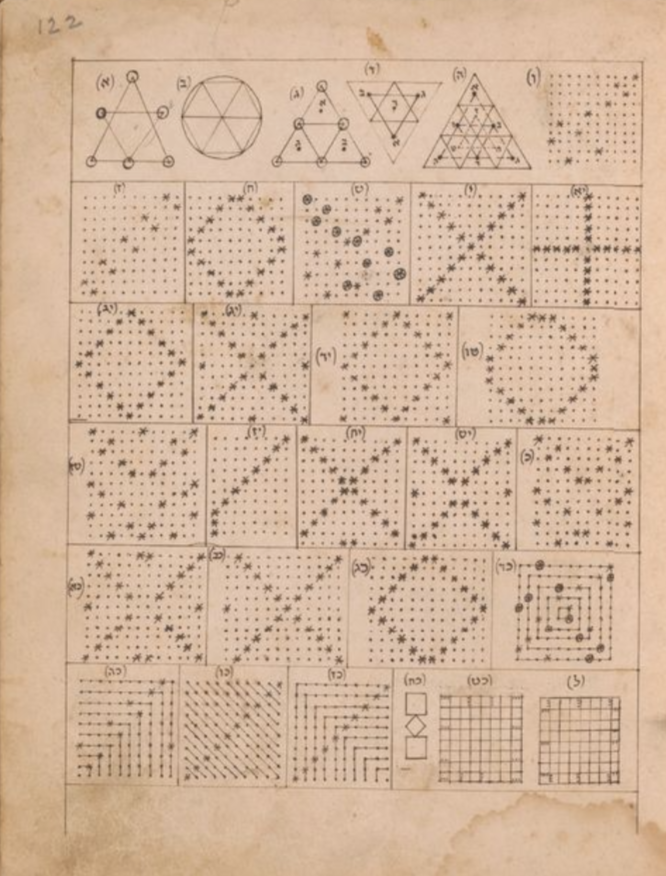
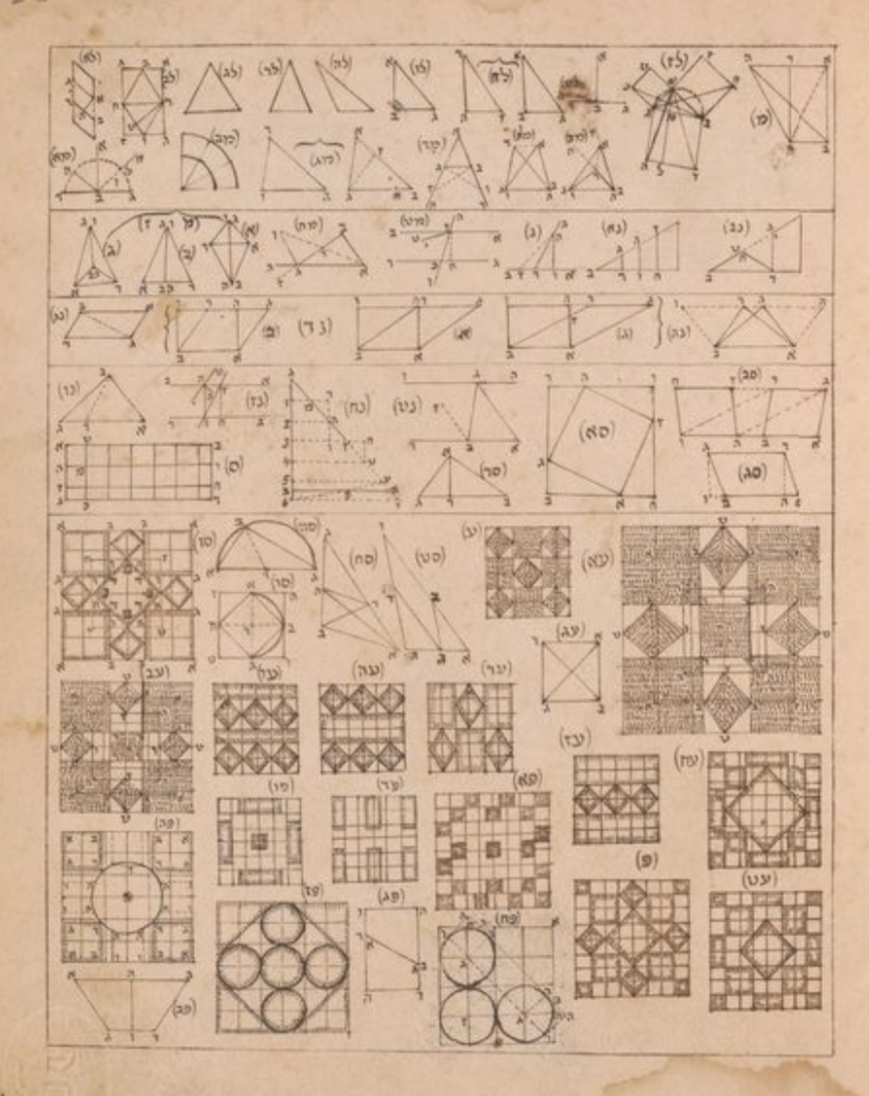
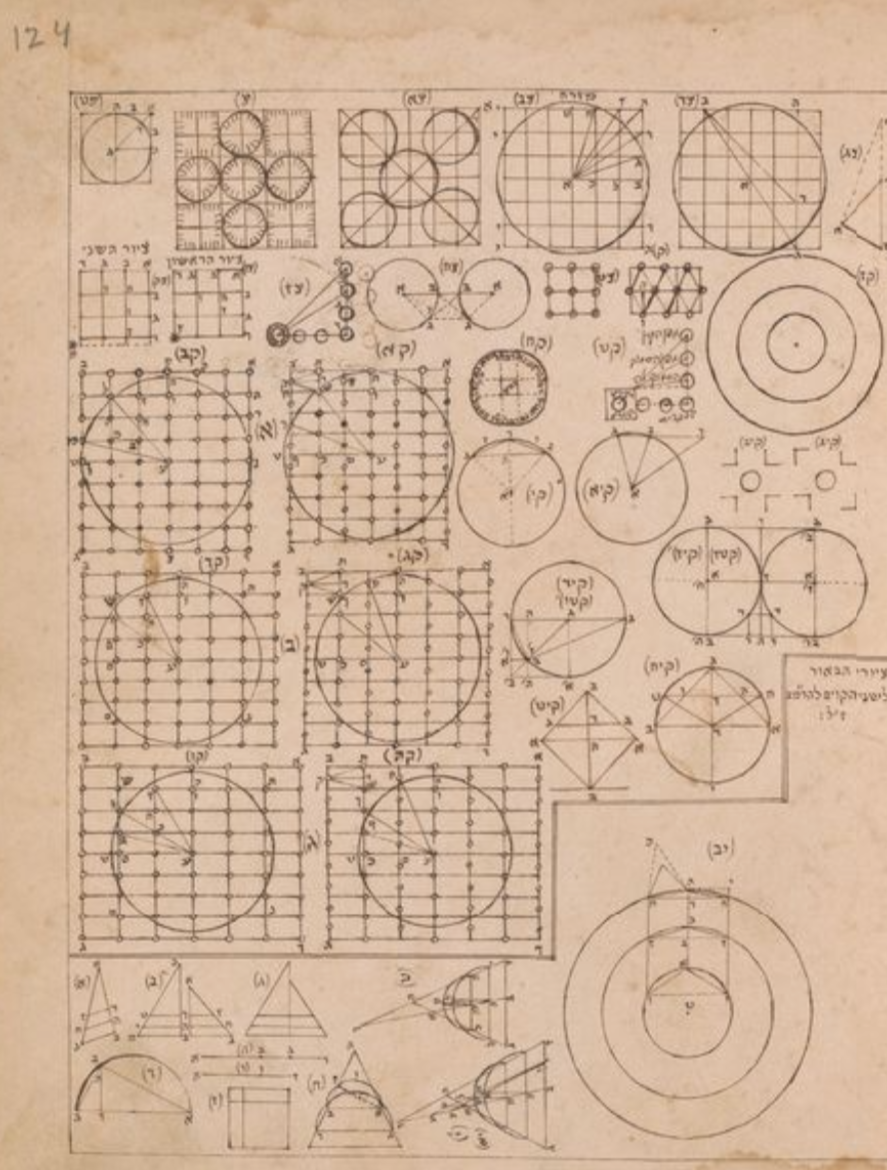
Luria's investigations draw upon Euclidean geometry. His treatment of Mishnah Kilayim 3:1–2, which concerns the boundaries separating different vegetables within a garden bed, is particularly revealing. The first Mishnah presents a problem of arranging boundaries on a flat surface; the second introduces a three-dimensional element that makes the geometry considerably more difficult. Similar questions of boundaries, shapes, and measurement arise throughout rabbinic law, notably in Eruvin and Sukkah. These are precisely the problems addressed by Euclidean geometry, making it a natural tool for interpreting such passages. The manuscript's three remarkable plates of diagrams, ranging from elementary constructions to intricate arrangements of points, lines, triangles, squares, and circles, give visual form to this mathematical approach.

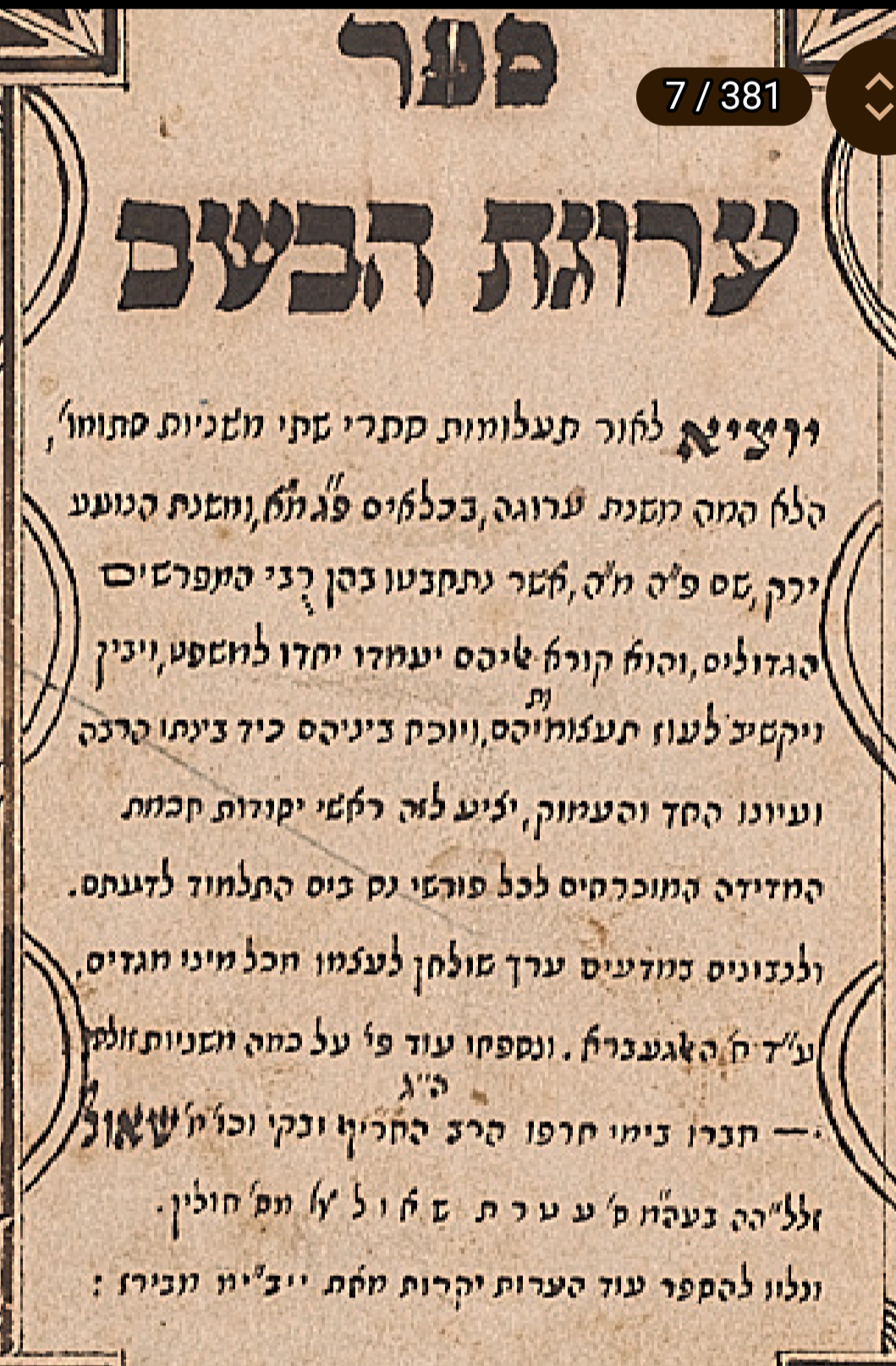
The manuscript is also a record of how rabbinic knowledge passed between generations. Its elaborate, decorated title page celebrates Luria's intellectual achievements while tracing his family relationships and rabbinic ancestry. Luria is described as both a gaon, a distinguished rabbinic scholar, and a mehandes, a practitioner of geometry. His father, Moshe Mishel Luria, served as an av bet din, a rabbinic judge.

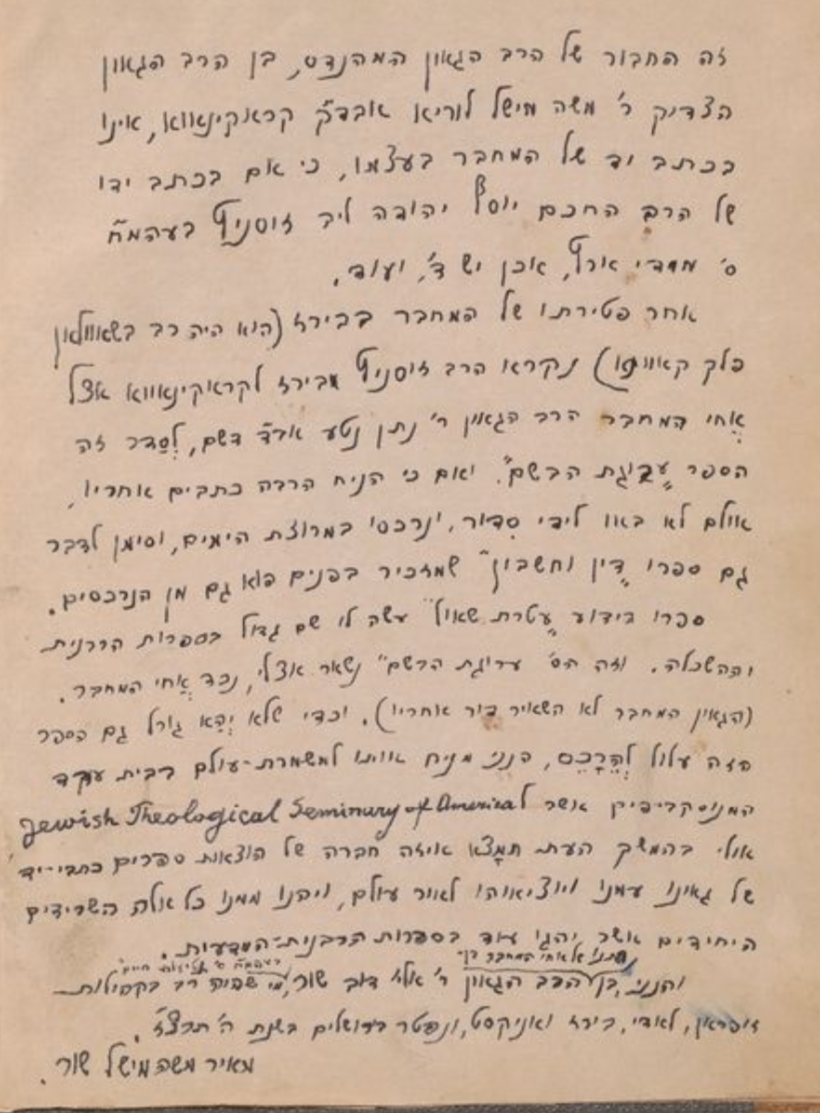
A handwritten note on the flyleaf, added by a later family member, Meir Moshe Mishel Shor, tells the story of the manuscript's production. After Luria's death, he left behind a substantial body of writings in an unorganized state. His brother, the rabbinic scholar Natan Neta Luria, arranged for Yosef Yehudah Leib Zusnitz to prepare the material. Zusnitz copied the manuscript and apparently undertook some degree of editorial organization, although we cannot determine how extensively he rearranged or revised Luria's original writings. Shor, who inherited the volume, identifies himself as a grandson of the author's brother.

The surviving manuscript therefore represents more than the work of a single scholar. Its mathematical discoveries were preserved through the efforts of relatives and fellow scholars who gathered, organized, copied, and transmitted them. In ʿArugat ha-Bosem, the history of mathematical learning is inseparable from the history of the family that preserved it.


Origin
Lithuania
Time Period
19th Century
Language
Hebrew
Medium
Manuscript on paper, 176 leaves; 22 × 18 cm
View Full Catalog Entry

A detail of the title page is followed by four other images on the carousel:

1. Geometric Diagrams: Points and Patterns

The first of three illustrated plates presents arrangements of points, triangles, hexagons, and regular grids. Selected points form intersecting lines, concentric patterns, and other geometric configurations, demonstrating relationships between position, spacing, and arrangement.

2. Geometric Diagrams: Lines, Angles, and Areas

The second plate combines elementary geometric constructions with elaborate arrangements of squares, triangles, circles, and subdivided grids. Its intricate patterns illustrate the mathematical relationships underlying Luria's interpretations.

3. Geometric Diagrams: Circles and Measurement

The third plate concentrates on circular geometry, including inscribed and intersecting circles, concentric rings, radii, chords, and constructions superimposed on grids. These figures demonstrate the relationship between curved and rectilinear forms.

4. Meir Moshe Mishel Shor's Flyleaf Note

In this handwritten account, Shor records the history of the manuscript's transmission. He describes the substantial literary remains left by Saul Luria and the efforts of the author's brother, Natan Neta, to have Yosef Yehudah Leib Zusnitz organize and copy them. The note provides valuable evidence of the family-sponsored preservation of rabbinic scholarship.